
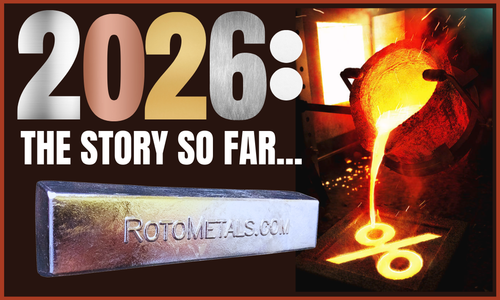
2026: The Story So Far
The strength of the non‑ferrous complex is tied to several converging factors. Demand remains elevated across electronics, infrastructure, renewable energy, and industrial manufacturing. At the same time, inventories are tight, and supply chains continue to face disruptions from geopolitical tension, energy‑related production cuts, and uneven smelter output. Higher prices are a double‑edged sword: they stimulate stronger flows into scrap yards but also increase the capital required to finance physical metal, creating cash‑flow pressure for operators.
Tin is one of the clearest examples of structural tightness. Solder demand remains strong, and global electronics production continues to expand. Meanwhile, political and operational challenges in major producing regions have limited supply growth. Analysts warn that these conditions could push the tin market toward deficit in 2026, echoing the broader non‑ferrous trend of demand outpacing supply. This environment affects everything from solder alloys to pewter and low‑melt metals.
Zinc and aluminum have followed a similar path—early‑year gains, followed by volatility, all within a context of constrained refined supply. Even with increased mining output, smelter shutdowns and energy‑related production issues have kept inventories tight. This contributes to price firmness and reinforces the broader upward pressure across the non‑ferrous sector.
Lead's price movements have been steadier, but regulatory pressure - especially in the United States - keeps it relevant. As infrastructure projects accelerate and lead-service-line replacement mandates move forward, the conversation around lead alternatives and specialty alloys continues to grow. While lead itself is not experiencing the same dramatic price swings as tin or zinc, it remains part of the larger non-ferrous story being shaped by policy, supply, and industrial demand.
Specialty non‑ferrous metals such as bismuth, pewter alloys, babbitt, and low‑melt fusible metals are influenced by the same macro forces. Higher base‑metal prices raise input costs, while geopolitical shifts and export controls tighten availability for certain strategic elements. These materials often sit outside mainstream market coverage, but they are deeply affected by the same supply‑demand imbalances driving the broader non‑ferrous surge.
Across the entire non‑ferrous landscape, 2026 is shaping up to be a year defined by rapid change. Analysts note that today’s volatility is not a sign of weakness but a signal of transformation driven by energy transition, digitalization, and global infrastructure renewal. These forces are reshaping how metals are produced, traded, and consumed, and they are creating a market environment where traditional assumptions about stability no longer apply.
Recent Posts
-

SCIENCE FAIR SEASON: LET'S EXPLORE ZINC
Every year when science fair season arrives, we see the same wave of students, teachers, and parent …Mar 24th 2026 -
2026: The Story So Far
Non‑ferrous metals have entered 2026 with a level of volatility and upward momentum that stands out …Feb 26th 2026 -

The Rotometals' Superhard Advantage
Superhard alloy has long been one of the quiet workhorses in the casting world and at Rotometals we’ …Feb 20th 2026